Clay vs Apollo.io + Claude: Same Clay Jobs, Code You Own
Clay vs Apollo.io is the wrong comparison. The real choice is Clay or Apollo.io + Claude. We run the jobs teams buy Clay for headless, in code you own: Apollo.io for data, Claude and Jev, a low-cost model, for judgment, direct APIs for the rest.
What Clay Costs: October 2026 Pricing
Clay bills on two meters. Actions pay for platform work: every enrichment, AI run and export uses one. Data Credits pay for the data. Clay says they start at $0.05 each, and its docs put a fully enriched record at 6 to 20 credits.
As of October 2026, Launch is $185 a month on monthly billing, with 2,500 Data Credits. At 6 to 20 credits per record, that covers about 125 to 416 fully enriched records a month. CRM sync, HTTP API calls and web intent wait for Growth, at $495 a month.
Prices from clay.com/pricing and Clay's Actions and Data Credits docs, October 2026. GTM Works is an Apollo.io Certified Agency Partner. We are not a Clay partner or affiliate.
Clay Plans, October 2026 Pricing
Free
$0500 Actions, 100 Data Credits. No CRM sync or signals.
Launch
$185/mo$167/mo billed annually. 15,000 Actions, 2,500 Data Credits, job change signals.
Growth
$495/mo$446/mo billed annually. 40,000 Actions, 6,000 Data Credits, CRM sync, web intent.
Enterprise
CustomAnnual commitment. Bulk enrichment over 50K records at once.
Top-ups
+30%Data Credits only, on Launch and Growth.
Clay Pricing Per Credit: What Data Credits Cost as Volume Grows
On monthly billing, Clay's Data Credits run from $0.05 each on the smallest tier to about $0.0425 on the 50,000-credit tier, by our math. Top-ups cost 30% more than your tier's rate.
Clay's entry plans cover small volumes. Past them, a bigger Action tier, top-ups and then Enterprise kick in. Here is what Clay's October 2026 pricing adds up to, from 1,000 to 50,000 records a month.
| Records a month | Clay plan you would need | Data Credits and cost a month | Actions a month |
|---|---|---|---|
| 1,000 | Launch if you only export to a sequencer. Growth ($495/mo) once records sync to HubSpot or Salesforce, or go out by HTTP API or webhook. | 6,000 to 20,000 credits: $290 to $880/mo. All-in: $350 to $940/mo on Launch, $495 to $1,085/mo on Growth. | 2,000 to about 9,600. Fits both plans. |
| 5,000 | Growth at the low end. At the high end, Clay's calculator switches to Enterprise. | 30,000 to 100,000 credits. Low end: the 20K tier plus 10,000 topped-up credits at a 30% premium, $1,452. High end: the 50K tier, the largest, plus 50,000 topped up, $4,888. All-in on Growth: $1,657 to $5,178/mo. | 10,000 to about 48,000. Past 40,000, Growth moves up to the 60K Action tier: +$85/mo. |
| 10,000 | Enterprise, by Clay's guidance for 10,000+ records a month. Self-serve Growth works only with top-ups every month. | 60,000 to 200,000 credits: $2,678 to $10,413/mo with top-ups. All-in on Growth: $2,883 to $10,863/mo. The high end needs $8,288 in top-ups a month: at least 9, each capped at $1,000, with no more than $5,000 in any 7 days. | 20,000 to about 96,000. The high end needs Growth's 100K Action tier: $450/mo instead of $205. |
| 25,000 | Self-serve covers 6 to 10 credits a record, up to the 250,000-credit ceiling. Past that, Enterprise. | 150,000 to 500,000 credits. At 6 a record: $7,650/mo with top-ups, $7,940 all-in. At 10 a record, you hit the 250,000-credit ceiling: $13,175/mo in credits. Past that, at Clay's cheapest monthly rate ($0.0425 a credit), 500,000 credits would be $21,250/mo, or $19,130 at the best annual rate. | 50,000 to about 240,000. The high end is past the largest self-serve tier (200K), and Actions cannot be topped up. |
| 50,000 | Enterprise only. Every point in the range is past the 250,000-credit self-serve ceiling, and Launch and Growth cap each table at 50,000 rows. | 300,000 to 1,000,000 credits. At Clay's cheapest monthly rate: $12,750 to $42,500/mo, or $11,478 to $38,260/mo at the best annual rate. Enterprise discounts are not published. | 100,000 to about 480,000. Needs at least the 100K tier ($450/mo on Growth). The high end is Enterprise. |
Our math from Clay's published pricing and docs, October 2026, monthly billing unless marked annual, rounded to whole dollars: 6 to 20 Data Credits per fully enriched record (Clay's estimate), the cheapest monthly tier, or tier plus top-ups, that covers it, top-ups at 30% over that tier's per-credit rate, a self-serve ceiling of 250,000 credits a month (the 50K tier plus Clay's 4x top-up cap), and Actions from 2 per record (one enrichment, one export) to about 9.6 (Clay's own Growth sizing). Enterprise prices are not published.
Every row hits two meters
Each enrichment uses Data Credits for the data and an Action for the platform work. AI runs, CRM syncs and exports add more Actions. Double the records and the bill roughly doubles, before top-ups and plan jumps.
Actions cap out
Actions reset every month and cannot be topped up. Run out with Data Credits left, and you buy a bigger Action tier. Past 200,000 Actions a month, the next step is Enterprise.
Past 50,000 credits, you pay a premium
50,000 Data Credits a month is the largest self-serve tier. Above it, top-ups cost 30% more, cap at $1,000 each and $5,000 in any 7 days, and Clay's calculator recommends Enterprise, which has no published price.
Your own keys still cost an Action
Clay's docs say connecting your own provider keys, Apollo.io's included, saves 50 to 80% on Data Credits. The provider bills you directly for the data, and Clay still charges an Action. So the same lookup bills twice.
On the Apollo.io + Claude stack, each source bills at its own price and the models bill by the token. There is no separate platform meter on top of the data and model costs. See Apollo.io's pricing for its plans and credits.
How the Apollo.io + Claude Stack Splits the Clay Work
GTM engineering is systems design: clean inputs, domain matching, enrichment, routing, suppression and write-back. None of it is unique to Clay. Clay made it popular. Knowing how to operate one platform is worth less than a system that keeps working, so that is what we build.
Data: Apollo.io and direct APIs
Apollo.io for contacts, accounts, waterfall enrichment across 20+ data partners, signals and sequences. Other sources, like TheirStack job postings or Exa web search, connect through their own APIs.
Judgment: Claude and Jev
Claude for research, writing and the final call. Jev for yes-or-no and graded questions at volume.
Build and run: GTM Works
We write the scripts with Claude Code, run them headless, and write results back to Apollo.io and your CRM. You own every field, list and script.
Claude Code vs Clay: Same Jobs, No Table to Rent
We run the Clay jobs headless: scripts and APIs on a schedule, with no table to click through. Claude Code writes the scripts.
The scripts are yours, and so are the data and the logic. Swap a data source and you change one script, not your whole stack. Nothing lives in a vendor's table.
Read the Jev tutorial →What You Pay For, Headless
Claude
API ratesBilled by the token. A dollar cap is set before every run.
Jev
$0.042 / 1M tokensInput tokens only. Output is free.
Apollo.io
Per seatContacts, enrichment, signals and sequences. Credits come with every paid plan: a verified email is 1 credit, a phone number 8, an AI research run 1.
Direct data APIs
Source's priceTheirStack job postings, Exa web search and others, billed by the source with no reseller credits in between.
Claude Code
Run by usWrites and maintains the scripts. The code is yours.
Clay vs Apollo.io + Claude, Job by Job
Contact Enrichment: Emails and Phone Numbers
What teams use Clay for
A waterfall across the data vendors in Clay's marketplace. Every enrichment uses an Action, and a fully enriched record runs 6 to 20 Data Credits.
How Apollo.io and Claude do it
Apollo.io enriches from its own database, and its waterfall checks 20+ data partners, or a vendor you bring, for emails and phone numbers. The data lands on the same record your sequences run from. When a job needs data Apollo.io does not have, a script calls that source's API directly.
What we set up
- Waterfall sources chosen with you
- Credit caps agreed before anything runs
- Enrichment on new lists, capped per run
- Other sources called by API when a job needs them
Waterfall enrichment
- Emails
- Phone numbers
- 20+ data partners
- Or bring your own vendor
Account Research: The Claygent Job
What teams use Clay for
Claygent researches each row on the web. Every AI run is an Action, and token-heavy models like Claude are billed in Data Credits by the token.
How Apollo.io and Claude do it
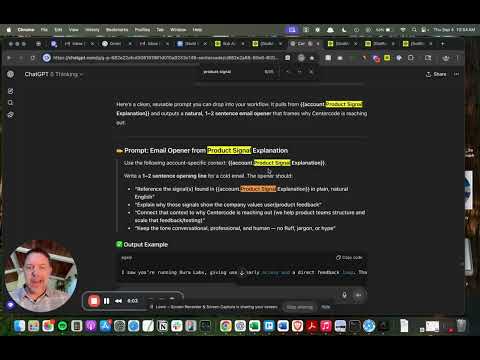
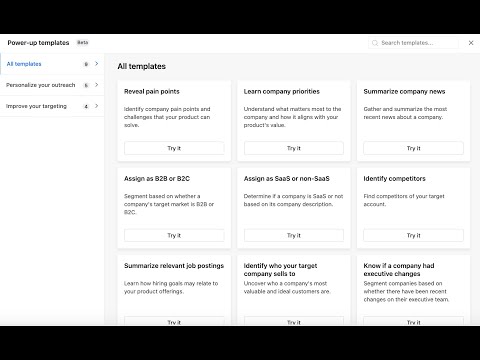
An Apollo.io AI Power-Up runs your prompt on every account and writes the answer to a custom field. It can ask, for example, whether each company bills its own customers, and the answer filters the list. For deeper notes, a script has Claude read the company's site, and we check every quote word for word.
What we set up
- Prompts tested on 10 to 15 accounts before a full run
- A custom field for each answer
- Workflows that route accounts on the answer
Scoring and Qualification
What teams use Clay for
Score columns built from formulas and AI prompts, with every AI run charged per row.
How Apollo.io and Claude do it
A custom Apollo.io score ranks accounts on fit and signals. On big lists, Jev, a low-cost model, scores every account and Claude reviews only the top scores. The two Jev passes cost $1.07, before that review.
What we set up
- Score weights set with you: fit, signal strength and recency
- Jev checked against Claude before it runs alone
- Top scores routed to a priority sequence, the middle to nurture
Signals: Job Changes, Hiring and Web Intent
What teams use Clay for
Job change signals start on Launch. Web intent starts on Growth, at $495 a month on monthly billing (October 2026 pricing).
How Apollo.io and Claude do it
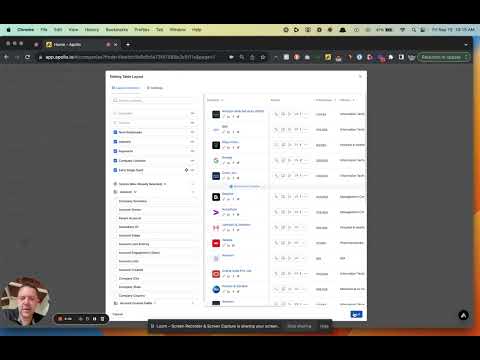
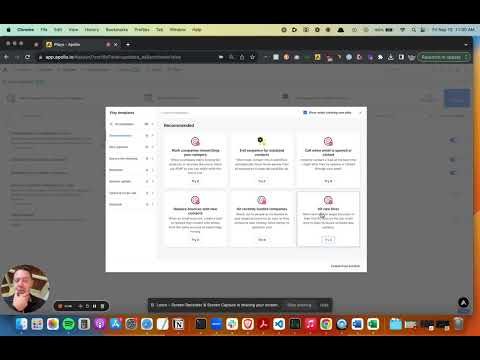
Apollo.io has job change alerts, the Job postings filter for hiring signals, its own website tracker and Bombora buying intent, with Workflows acting on each (signal-based outbound). When a team needs wider job data, we sync TheirStack job postings into Apollo.io lists. Signals reach HubSpot or Salesforce through Apollo.io's CRM sync. LinkedIn refills are checked against LinkedIn and Apollo.io's latest work history before anyone is messaged.
What we set up
- Job change alerts on past customers and champions
- Job postings searches saved with an alert
- Website visitor and intent Workflows

List Cleanup and Domain Matching
What teams use Clay for
A chain of columns you build yourself: find the site, check the homepage, score the match, then fix the misses.
How Apollo.io and Claude do it
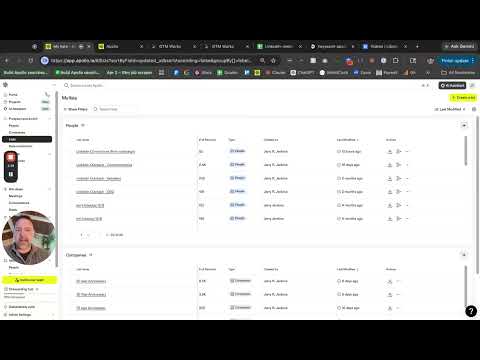
Our free Domain Finder turns company names into verified domains, color-coded by confidence. Across recent jobs, 85 to 95 percent of rows come back high or medium. We then match accounts in Apollo.io by domain, never by name, so uploads do not create duplicates.
What we set up
- Company names matched to verified domains
- Accounts matched in Apollo.io by domain
- Low-confidence rows flagged for review, not imported
Domain Finder
Company names in, verified domains out. Free up to 100 rows.
Try the Domain Finder →CRM Sync, Sequences and LinkedIn
What teams use Clay for
HubSpot and Salesforce sync, HTTP API calls and webhooks start on Growth. Every record exported, or added to a HeyReach campaign, is another Action.
How Apollo.io and Claude do it
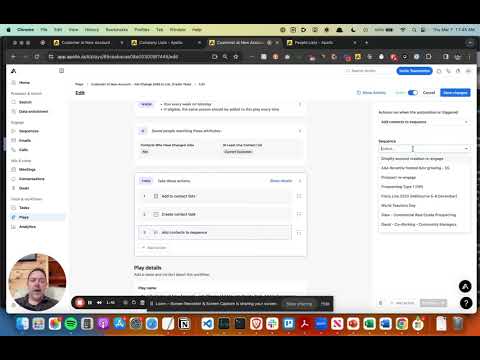
Apollo.io syncs natively with HubSpot and Salesforce and runs the email sequences. LinkedIn runs through our Apollo.io HeyReach integration: weekly refills from Apollo.io lists, accepts and replies written back to Apollo.io, and an Apollo.io stage change stops the lead in HeyReach.
What we set up
- Apollo.io connected to your CRM, with fields mapped
- Sequences that start from lists and Workflows
- LinkedIn campaigns refilled weekly from Apollo.io lists
Anything Else: Custom Builds With Claude Code
What teams use Clay for
More tables, HTTP API calls from Growth up, and a specialist to keep them running.
How Apollo.io and Claude do it
Claude Code writes the script against the Apollo.io API and any other API the job needs. We deploy it, it runs on a schedule, and the code is yours. For Reputation Prime, we built a Reddit signal engine that writes the thread, sentiment and keyword to Apollo.io custom fields.
What we set up
- Results written to Apollo.io custom fields and lists
- Code, data and accounts you own
- Claude for research and judgment
- Jev for low-cost classification at volume
- The Apollo.io API for reads and writes
- Direct data APIs, such as TheirStack and Exa
- Node.js or Python, deployed on Railway or your own infrastructure
- n8n for workflow automation
When Clay Is Worth It
Clay is a strong product with great marketing. If your team has a GTM engineer, runs huge lists every week, and needs niche data spread across many vendors, it can earn its price.
For most small and mid-market teams, we think it is more platform than the job needs, plus tables someone has to maintain. The records Apollo.io's waterfall misses rarely justify it. When a niche source matters, we connect to its API directly.
Clay Earns Its Price When
- You need niche data spread across many vendors
- You enrich huge lists every week (bulk runs over 50K records are Enterprise only)
- Someone on staff owns the tables
- Your team already lives in Clay
Built Without Clay
Apollo.io accounts re-scored
$1.07 of Jev cost for both low-cost scoring passes. 1,015 confirmed fits, and 1,040 of 1,044 quotes verified word for word.
Read how →Rows matched with high or medium confidence
Across recent jobs on our free Domain Finder. Company names in, verified domains out.
Try it free →Positive replies a month
For Reputation Prime, from a Reddit signal engine built on Claude, n8n and Apollo.io.
Read the case study →From Clay Tables to Scheduled Scripts
Scope
We map every Clay job you run today, or plan to, and set up Apollo.io first if you are not on it yet.
Build Together
We build each job in Apollo.io and Claude on a recorded working session. The scripts and the recording are yours to keep.
Run and Compare
We run it on a sample, or next to Clay if you have it, and check the output with you. Anything that still needs a niche vendor gets flagged before you commit.
Everything Built, Then Run
- Every Clay job you run, or plan to, mapped to Apollo.io and Claude
- Waterfall enrichment, research prompts and scores in Apollo.io
- Signals and the Workflows that act on them
- Headless scripts on a schedule, in code you own
- Custom fields and lists in your Apollo.io and CRM
- Email and LinkedIn outreach, written and run by us
- Credit caps agreed before anything runs
Apollo.io Setup
Built, then managed
+ $999/mo ongoing management
Research, scoring and signal builds fall under the AI Signal-Powered GTM Build: Custom, Contact for Quote. On Apollo.io already? We work in it with our free partner seat. Not yet? Sign up through our affiliate link for 10% off setup.
See all pricing →Clay vs Apollo.io + Claude FAQ
For most teams, Apollo.io + Claude is the better buy. Apollo.io has the data, sequences, CRM sync and its own waterfall enrichment. Claude and Jev handle the research and scoring. Together they cover what most teams use Clay for, with code you own.
Partly. Both sell contact data, enrichment and signals. Clay's docs even suggest connecting provider keys, Apollo.io's included, to cut Data Credit spend. Each enrichment still uses an Action. We would rather you work in Apollo.io directly.
Some teams run all three: Apollo.io for data, Clay for enrichment tables, Claude for research. We drop the middle layer. Apollo.io and direct APIs supply the data, Claude and Jev do the judgment, and code ties it together. No table to pay for per row, and no logic locked inside one.
October 2026 pricing: Free is $0. Launch is $185 a month, or $167 a month billed annually, with 2,500 Data Credits. Growth is $495 a month, or $446 a month billed annually, with 6,000 Data Credits. Enterprise is custom, with an annual commitment. HubSpot and Salesforce sync start on Growth.
By the row, with jumps. A fully enriched record uses 6 to 20 Data Credits, plus an Action for each enrichment and export. 50,000 Data Credits a month is the largest self-serve tier, about 2,500 to 8,300 fully enriched records. Past that, top-ups cost 30% more and Clay's calculator recommends Enterprise. By our math from Clay's October 2026 pricing, 10,000 records a month runs about $2,883 to $10,863 a month on Growth.
Actions pay for platform work: one per enrichment, AI run or record exported. Data Credits pay for data. Clay says they start at $0.05 each, and puts a fully enriched record at 6 to 20. Actions reset monthly and cannot be topped up. On monthly Launch and Growth plans, Data Credits roll over up to 2x the monthly amount, top-ups cost 30% more, and empty results are not charged.
In our view, yes, where it counts. A table exports to CSV for free, but the formulas, prompts and enrichment chains that build it live in Clay, so leaving means rebuilding them. Annual plans roll over 15% of unused Data Credits only if you renew at the same tier or higher. Our builds run as code you own, against APIs you can swap.
Yes. You connect your own Apollo.io API key inside Clay. Those lookups skip Data Credits but still use one Action each, and Apollo.io charges its own credits for the same lookup.
For most jobs, yes, with someone who knows the data driving it. Claude Code writes the research, scoring and enrichment scripts against the Apollo.io API and other data APIs. They run headless at model and data cost, and the code is yours. You give up Clay's visual table. We run it, so you never touch the code.
Clay reaches a big marketplace of data vendors from one table, and the table shows every step. Apollo.io's waterfall covers emails and phone numbers across 20+ data partners, Claude covers the research, and we connect other sources by API when a job needs them. For SMB and mid-market targets, that is enough. For niche data on huge weekly lists, Clay can earn its price.
For a team with a GTM engineer, big weekly lists and niche data needs, it can be. For most small and mid-market teams, Apollo.io's waterfall plus Claude covers the same jobs, and the cost gap widens as volume grows.
You need the system, not the Clay skill. Matching by domain, enrichment, routing, suppression and write-back to your CRM work the same on any stack. We design and run that system on Apollo.io, with Claude and Jev doing the research and scoring, in code you own.
Clay is well marketed and has a big ecosystem. Its expert directory lists 188 solution partners (October 2026). Clay says it will share 20% of revenue with solution partners on new shared customers, and its Creators program gives perks to people who share Clay. We think that ecosystem is a big reason Clay feels mandatory. We are an Apollo.io partner, so weigh our view the same way.
For most teams, Apollo.io + Claude, run headless. Apollo.io supplies the data and sequences, Claude and Jev do the research and scoring, and the code is yours. Apollo.io Setup is $4,500 + $999/mo, built and run by us. Research, scoring and signal builds are quoted per project.
Run the Clay Jobs Headless, in Code You Own
Tell us which Clay jobs you run today, or plan to. We map each one to Apollo.io and Claude and send a quote.
Get Started